


A healthy school year starts with staying up-to-date on all vaccines.
A healthy school year starts with staying up-to-date on all vaccines.
Every Vaccine Counts is a Cook County Department of Public Health campaign to help families understand which vaccines children need, why they matter and where to get trusted information.
Why Vaccines Matter
Protection at Every Age
Children need different vaccines at different ages because the risk from certain diseases changes as they grow. Vaccines work best when they are given on schedule, before a child is exposed to a disease.
- Delaying vaccines can leave children unprotected when they are most vulnerable.
- Each vaccine protects against a different serious disease.
- High vaccination coverage helps prevent outbreaks in schools, childcare settings and communities.
- Vaccination also helps protect infants and people with certain medical conditions who may be more vulnerable to severe illness.
Know the Vaccines
What Does Each Vaccine Protect Against?
DTaP / Tdap — Diphtheria, Tetanus and Pertussis
Why it matters: Protects against three serious diseases: diptheria, tetanus, and pertussis (also known as whooping cough). All three of these diseases can cause death. Tetanus can cause severe muscle spasms, and diphtheria can block the airway and damage the heart and nerves.
When recommended: Routine childhood doses begin in infancy, with a DTaP booster at ages 4–6 and a Tdap dose at ages 11–12.
Safety: These vaccines have been extensively studied and monitored. Most side effects are mild and temporary.
Polio (IPV)
Why it matters: Protects against polio, which can cause lifelong paralysis. Polio is rare in the United States but still exists in other parts of the world and can spread through travel.
When recommended: Routine doses begin in infancy, with the final childhood dose generally given at ages 4–6.
Safety: IPV uses inactivated virus and cannot cause polio. Side effects are usually mild.
MMR — Measles, Mumps and Rubella
Why it matters: Measles is extremely contagious and can cause pneumonia, brain swelling, hospitalization or death. Mumps can cause serious complications, and rubella during pregnancy can cause severe birth defects.
When recommended: First dose at 12–15 months; second dose at ages 4–6.
Safety: MMR has decades of safety monitoring. Extensive research has found no link between MMR vaccination and autism.
Hepatitis A
Why it matters: Protects against a contagious liver infection that can spread through close contact or contaminated food and water. Children can spread hepatitis A even when they have few or no symptoms.
When recommended: AAP recommends routine vaccination beginning at 12–23 months, with completion of the series according to the recommended schedule.
Safety: Hepatitis A vaccines have a strong safety record; common side effects are generally mild and temporary.
Hepatitis B
Why it matters: Protects against a virus that attacks the liver. Infection early in life can become chronic and lead to liver disease or liver cancer later in life.
When recommended: Protection begins in infancy, with additional doses to complete the series.
Safety: Hepatitis B vaccine is one of the most studied vaccines and has been safely given to millions of children.
Varicella — Chickenpox
Why it matters: Chickenpox is more than an itchy rash. It can cause serious skin infections, pneumonia and hospitalization.
When recommended: First dose at 12–15 months; second dose at ages 4–6.
Safety: The vaccine is highly effective at preventing severe chickenpox. Most side effects to the vaccine are mild.
Hib — Haemophilus influenzae type b
Why it matters: Protects young children from bacterial meningitis and bloodstream infections that can cause hearing loss, brain damage or death.
When recommended: Series begins at 2 months, with the final routine dose generally at 12–15 months.
Safety: Hib vaccine has decades of safe use and has dramatically reduced serious Hib disease in children.
HPV — Human Papillomavirus
Why it matters: Helps prevent six types of cancer later in life, including cervical, throat, anal, penile, vulvar and vaginal cancers.
When recommended: AAP recommends beginning the HPV series between ages 9–12.
Safety: HPV vaccines have been closely monitored for safety worldwide. Cancer prevention begins with vaccination.
Pneumococcal Conjugate Vaccine (PCV)
Why it matters: Protects against bacteria that can cause pneumonia, meningitis, bloodstream infections and ear infections. Young children are at increased risk of severe disease.
When recommended: Routine doses begin in infancy, with a dose at 12–15 months.
Safety: PCV vaccines are carefully tested and monitored. Serious reactions are uncommon.
Meningococcal ACWY
Why it matters: Protects against meningococcal disease, including bacterial meningitis and bloodstream infections that can become life threatening very quickly.
When recommended: AAP recommends a routine dose at ages 11–12 and a booster at age 16.
Safety: These vaccines have years of safety monitoring. Most side effects are mild and short lived.
Meningococcal B
Why it matters: It protects against a bacteria which can cause life-threatening meningitis and bloodstream infections.
When recommended: It’s recommended for adolescents (ages 16–18) especially before college.
Safety: These vaccines have years of safety monitoring. Most side effects are mild and short lived.
Rotovirus
Why it matters: It protects against severe diarrhea, vomiting and dehydration in babies and young children.
When recommended: It’s recommended for infants beginning at 2 months of age, to protect them when they are most vulnerable to severe illness.
Safety: These vaccines have years of safety monitoring. Most side effects are mild and short lived.
Vaccines For School
Is Your Child Ready for School?
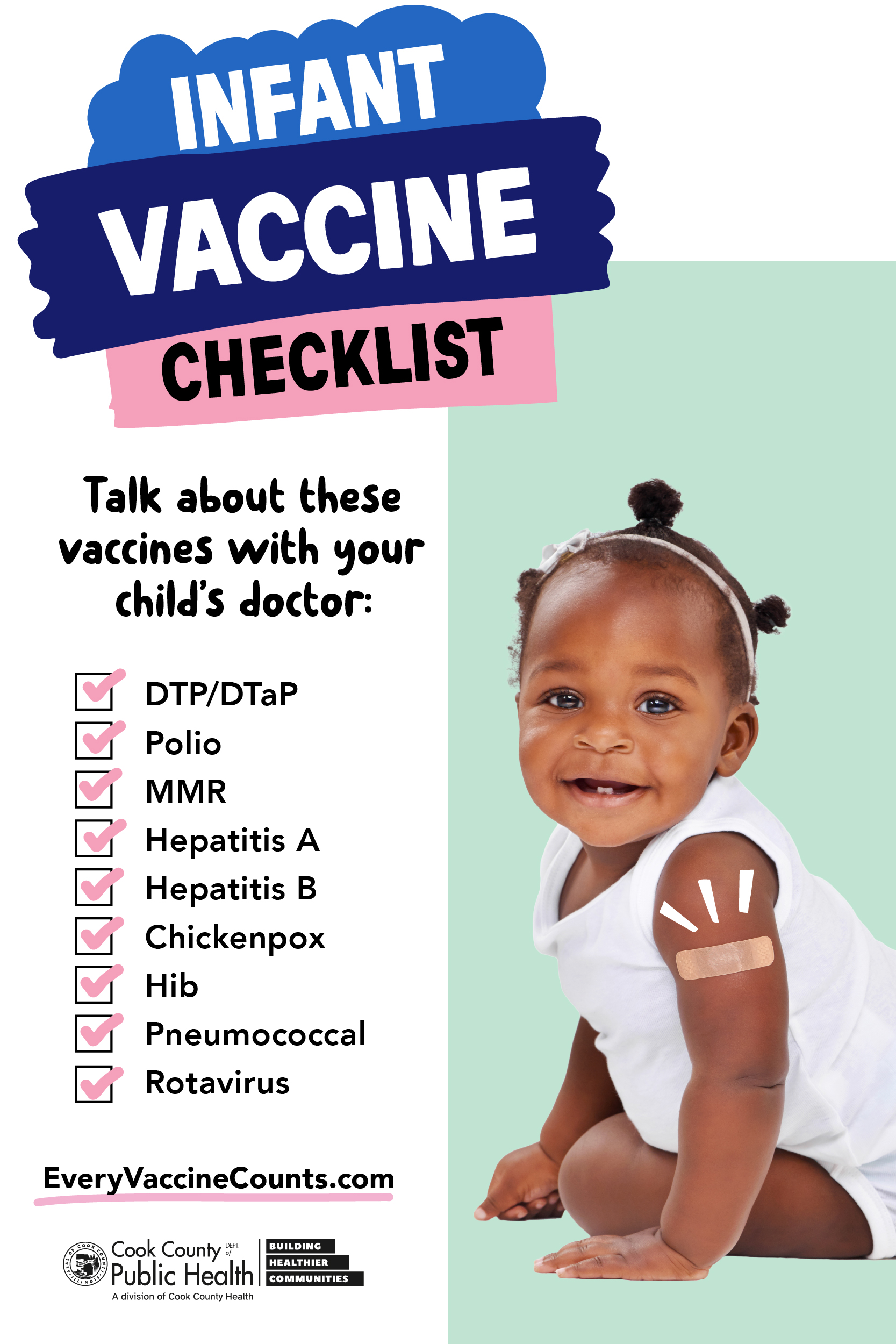
Infant
This is an important time to review your child’s full vaccine record and complete any doses recommended for their age.
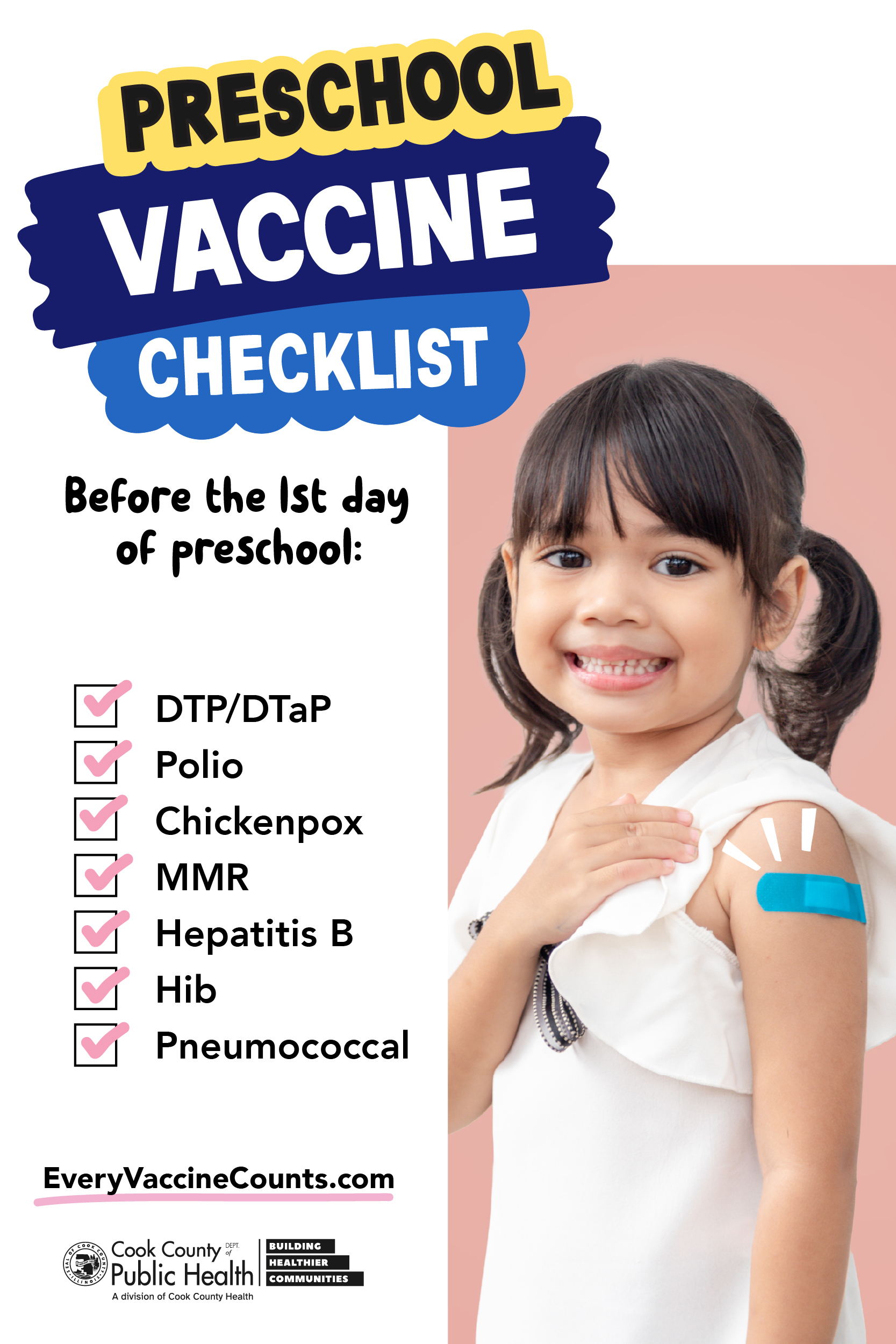
Preschool
Before preschool or child care, make sure your child’s vaccine record is up to date. Requirements change as young children reach new ages, so check with your provider or school.
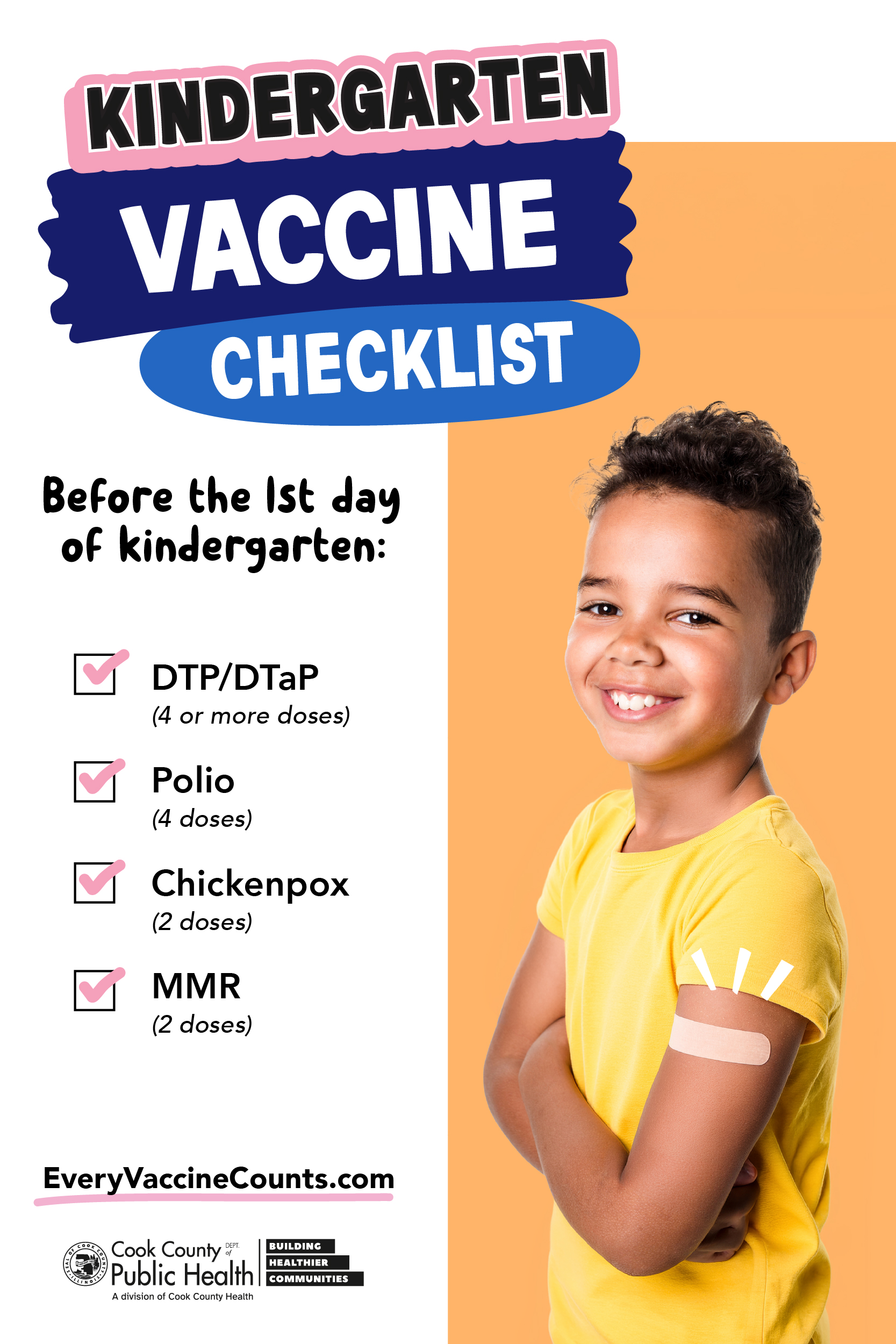
Kindergarten
Starting kindergarten? This is an important time to review your child’s full vaccine record and complete any doses needed for school and recommended for their age.
6th Grade
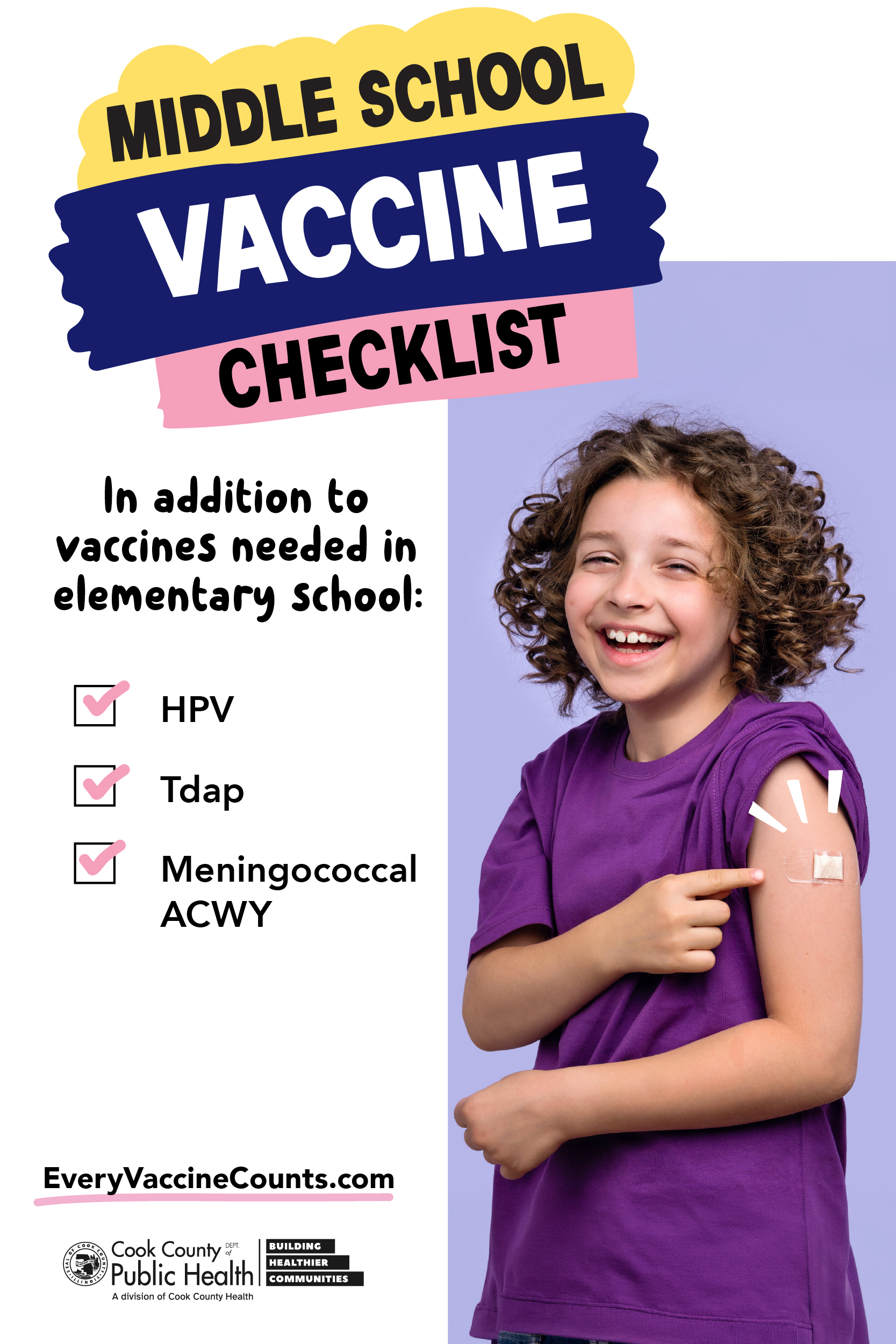
Heading into 6th grade? Ask about Tdap and meningococcal vaccination and make sure the hepatitis B series and other routine vaccines are complete.
12th Grade
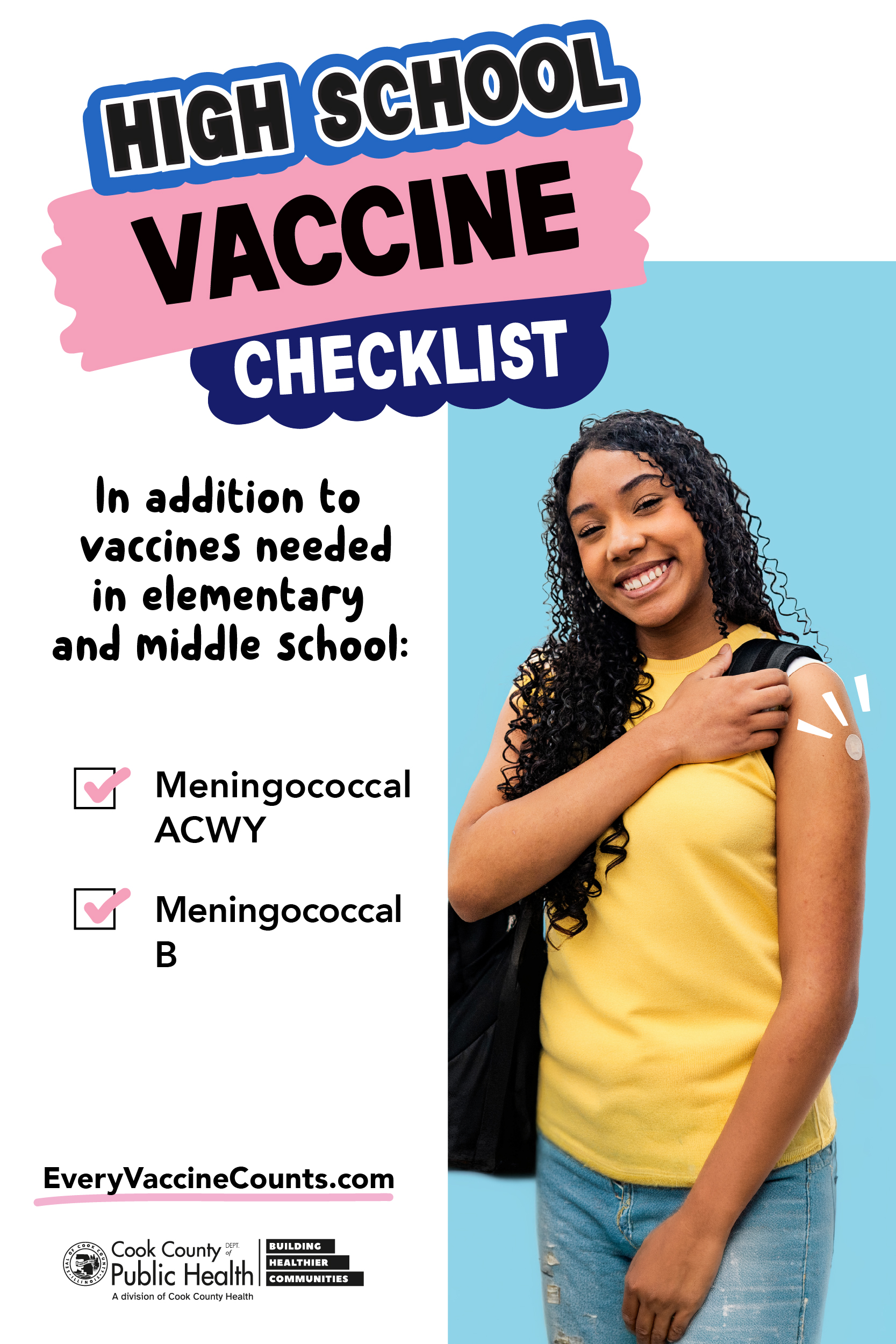
12th Grade. Illinois has an additional meningococcal requirement at that grade.
Important: Families should talk with their child’s health care provider about all recommended vaccines, not only those required for school.
Find a Clinic
CCDPH is providing back-to-school immunizations at no cost for the 2026-27 school year to suburban Cook County children ages 6 months to 18 years old, regardless of immigration or insurance status, now through mid-October. Registration encouraged. Walk-ins welcome. See clinic schedule.
Vaccination clinics made possible with funding from the Illinois Department of Public Health.
Vaccine Safety
Vaccines Are Carefully Studied and Monitored
It is normal for parents to have questions about vaccines. Vaccine recommendations are based on evidence about disease risk, vaccine effectiveness and safety.
- Vaccines are studied before they are approved for use.
- Safety continues to be monitored after vaccines are approved and used.
- Most vaccine side effects are mild and temporary, such as soreness, redness or a low fever.
- Serious reactions are rare. The diseases vaccines prevent can cause hospitalization, disability and death.
- Receiving recommended vaccines on time helps protect children during the ages when they may be most vulnerable.
Fact vs. Myth
Questions About Vaccines? Get the Facts.
Myth
“My child can wait. We can catch up later.”
Fact
Delaying recommended vaccines can leave a child unprotected during periods when they are vulnerable to serious disease.
Myth
“If a disease is rare, my child does not need the vaccine.”
Fact
Many vaccine-preventable diseases became rare because vaccination has kept them under control. When vaccination rates fall, diseases can return and outbreaks can occur. We are seeing this now with Measles!
Myth
“Getting several vaccines at one visit is too much for a child’s immune system.”
Fact
Recommended vaccine schedules are designed and reviewed to provide protection at the ages children need it. Giving recommended vaccines at the same visit is a standard practice and helps prevent delays in protection.
Myth
“The MMR vaccine causes autism.”
Fact
Decades of high-quality research have found no causal link between the MMR vaccine and autism.
Myth
“Only vaccines required for school are important.”
Fact
School requirements set minimum standards. Other vaccines recommended by pediatric experts protect children against additional serious diseases and cancers.
Stay Up to Date
We also recommend these additional vaccines:
Flu
The AAP recommends annual influenza vaccination for all children age 6 months and older unless their healthcare provider says they should not get one. Flu can cause serious illness even in otherwise healthy children, and vaccination reduces the risk of severe outcomes.
COVID-19
AAP’s 2026 schedule recommends COVID-19 vaccination for all children ages 6–23 months, recommends it for children ages 2–17 who are at increased risk, and supports vaccination for older children whose families desire protection. Guidance for the 2026–27 respiratory season is updated as new evidence becomes available.
RSV
Respiratory Syncytial Virus (RSV) Infection can cause serious respiratory illness in babies and young children, including bronchiolitis and pneumonia. AAP recommends that infants be protected against RSV through maternal RSV vaccination during pregnancy or an RSV preventive antibody given to the infant. Most infants do not need both.
Protect Their Health. Keep Vaccines Up to Date.
Not sure whether your child is up to date? Review their vaccine record and talk with their pediatrician or health care provider. If your child has fallen behind, ask about a catch-up schedule. A vaccine series generally does not need to be restarted simply because time has passed between doses.
Updated October 6, 2026, 2:06 PM