



Media Contact: Yolanda Y. Harris, [email protected], Hernan Fratto, [email protected], Natalia Derevyanny, [email protected]
Expanded awareness, stronger partnerships and investment in harm-reduction strategies are helping save lives as Chicago and Cook County continue to see declines in fatal opioid overdoses.
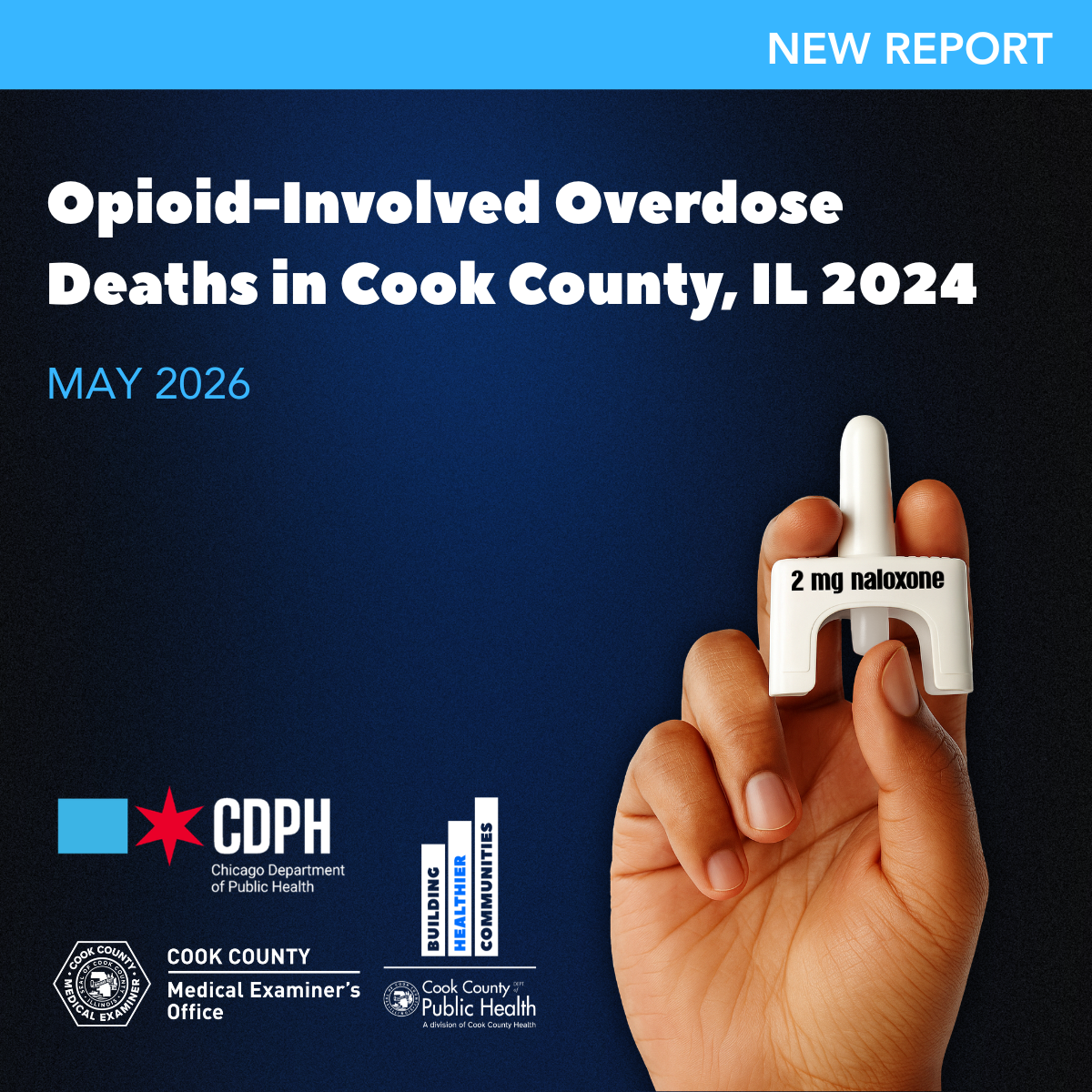
SUBURBAN COOK COUNTY, IL – Chicago and suburban Cook County have experienced a third consecutive year of declines in opioid overdose deaths, according to a new report released by Cook County Department of Public Health, Chicago Department of Public Health and the Cook County Medical Examiner’s Office.
Opioid-involved overdose deaths in Cook County declined by 42% in 2024 compared to 2022. Of all U.S. counties, Cook County has seen the largest reduction in overdose deaths since the national peak of the crisis in 2023. Overall, 1,138 people in Cook County (835 in Chicago and 279 in suburban Cook County) died from an opioid-involved overdose in 2024, compared to 1,783 people in 2023 and 1,961 in 2022.
Chicago’s opioid overdose mortality rate of 28.7 per 100,000 in 2024 exceeded the state of Illinois’ rate of 14.6 and the nation’s rate of 17.9, according to the CDC. However, the city saw its opioid overdose mortality rate plummet 37.2% between 2023 and 2024, compared to a 3.9% drop the prior year. With an opioid overdose mortality rate of 10.8 per 100,000 in 2024, suburban Cook County experienced a 33.3% decline in its overdose mortality rate, compared to a 25% decline in the previous year.
“We are encouraged to see the continued decline in opioid overdose deaths in Cook County,” said Cook County Department of Public Health Chief Operating Officer Dr. Kiran Joshi. “We know that the overdose prevention and harm reduction strategies that are being deployed through public health and community partners are making a difference. Continuing these strategies will help save more lives.”
“Multiple factors contribute to the decline in overdose mortality rates, including distribution of naloxone and wider access to medications like buprenorphine,” said Fikirte Wagaw, acting commissioner, Chicago Department of Public Health. “Continued investment in overdose prevention strategies is imperative if we want to see mortality rates stay on the downward trend.”
“Fentanyl can be 50 times more potent than heroin and 100 times more powerful than morphine. It is the culprit in the vast majority of opioid overdose deaths, often mixed with other drugs like benzodiazepines, cocaine and xylazine,” said Cook County Chief Medical Examiner Dr. Ponni Arunkumar. “We are pleased to see the downward trend in these deaths but must remain vigilant and continue intervention efforts to curb these preventable deaths.”
Report Highlights:
In addition to the decline in overdose deaths, the report revealed the following trends and demographics pertaining to overdoses:
- Fentanyl was involved in 91.7% of opioid overdose deaths in Chicago and in 87.1% of deaths in suburban Cook County.
- Adults aged 55-64 in Chicago experienced the highest opioid overdose rate, while adults aged 35-44 in suburban Cook Conty experienced the highest overdose rate.
- Black individuals in Chicago experienced overdose rates at 2.5 times the rate of white individuals and nearly 4 times higher than Hispanic individuals in 2024. Suburban Cook County saw similar racial disparities.
- Males died from opioid–involved overdoses at substantially higher rates than females in both Chicago and suburban Cook County.
- Opioid overdose deaths decreased for all race and ethnicity groups in Cook County between 2023 and 2024.
Note: The latest data available on opioid overdose deaths is 2024 due to a thorough and detailed data collection process involving data cleaning, quality checks and analysis.
Public Health Interventions:
Cook County Department of Public Health (CCDPH) and Chicago Department of Public Health (CDPH) are committed to implementing public education and overdose prevention strategies throughout Cook County.
“In Chicago, the significant drop in opioid overdose deaths in 2024 reflects the impact of a strategic, community‑driven plan that expanded free naloxone distribution and overdose‑prevention education in the neighborhoods where it was needed most,” Wagaw said.
By directing resources based on real-time data and partnering closely with community organizations, harm‑reduction leaders, healthcare providers, and public safety experts, CDPH ensured that life‑saving tools and information reached residents at the highest risk. This coordinated approach strengthened local response networks, increased public awareness, and helped drive the sharp decline in fatal overdoses across the city.
Cook County Department of Public Health has trained suburban organizations on how to recognize and respond to a drug overdose using naloxone and has made fentanyl and other test strips available to organizations. In 2023 and 2024, CCDPH and community partners funded by CCDPH distributed 25,136 naloxone kits and trained 14,252 individuals on overdose response, naloxone administration, and other harm reduction strategies. CCDPH also awarded $741,805 in Cook County American Rescue Plan Act funds to community-based organizations between 2023 and 2024 for opioid overdose prevention and harm reduction strategies.
In 2025, Cook County Department of Public Health launched its “Get Naloxone” awareness campaign to educate residents about naloxone. The campaign consisted of digital marketing, billboards, community posters and a YouTube video that teach people how to use naloxone and directs them to free distribution sites. In addition, the department collaborated with 50 businesses, libraries, colleges and community partners, which hosted community naloxone boxes containing free naloxone kits in ZIP codes with the highest numbers of opioid-involved overdose deaths. As a result, at least two lives have been saved through the Community Naloxone Box program. Also, 19,000 doses of naloxone have been distributed to the public.
“Our work educating the public about overdose prevention and distributing naloxone is making a difference in suburban Cook County,” Joshi said. “However, the racial disparities in overdose mortality rates indicate that more outreach is needed in communities of color.”
###