


Mpox
What is mpox?
Mpox (previously known as monkeypox) is a viral infection caused by the mpox virus, related to smallpox but usually less severe. Mpox can affect anyone regardless of gender or sexual orientation. Early identification, testing, and treatment helps stop mpox from spreading.
How mpox spreads:
- Close physical contact with someone who has mpox, including:
- Intimate or sexual contact (oral, anal, or vaginal sex)
- Touching lesions, rashes, or body fluids
- Hugging, kissing, or prolonged face-to-face contact
- Contact with contaminated items such as clothing, bedding, or towels used by someone with mpox.
- Transmission can also occur from pregnant parent to baby during pregnancy or birth.
- The virus can enter the body through broken skin, the respiratory tract, or mucous membranes (eyes, nose, mouth).
Symptoms
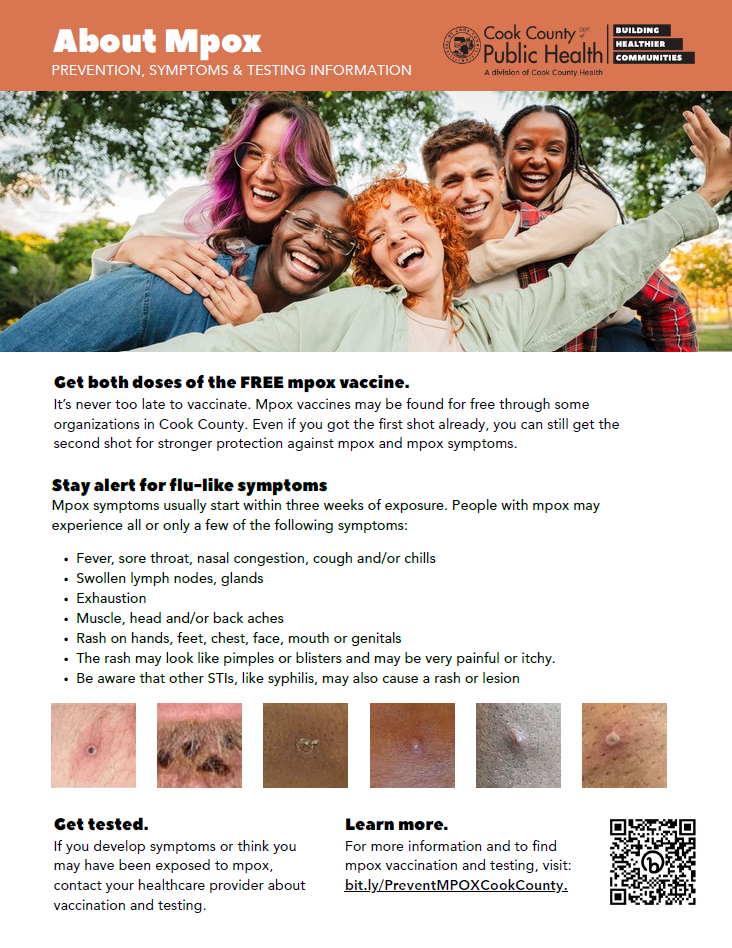
Symptoms typically start 3–21 days after exposure.
Early signs
- Fever, chills, headache
- Muscle aches, fatigue
- Swollen lymph nodes
Rash and lesions
- Flat spots that become raised, filled with fluid, then crust over
- Can appear on the face, hands, genitals, or throughout the body
- Lesions may be painful or itchy
- Some people may have only a few lesions or mild symptoms
Get Tested
- Testing helps confirm diagnosis and prevent further spread.
- Mpox can look like other conditions (e.g., herpes, syphilis, chickenpox), so lab testing is needed.
- If you have unexplained rashes or sores, especially after close contact withsomeone who has mpox, seek medical care immediately.
- Find testing sites in suburban Cook County.
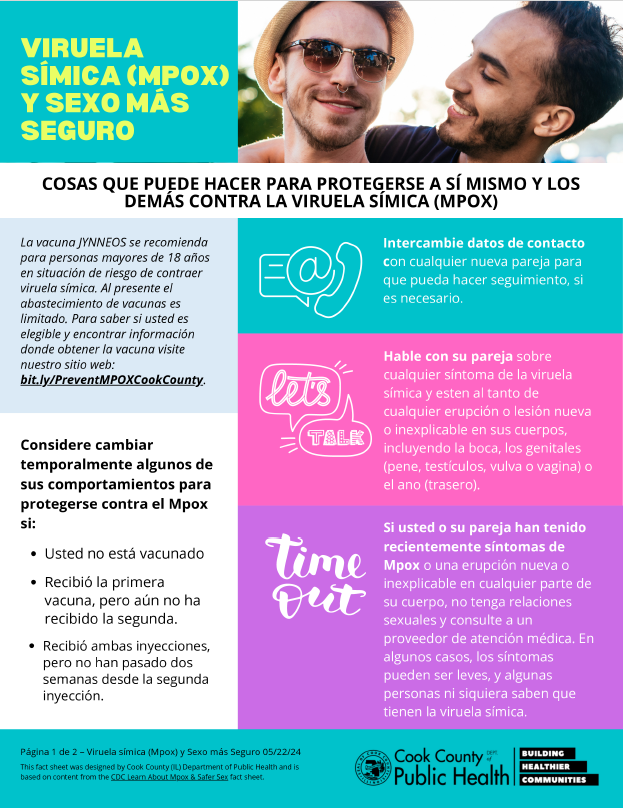
- Request free condoms.
Get vaccinated
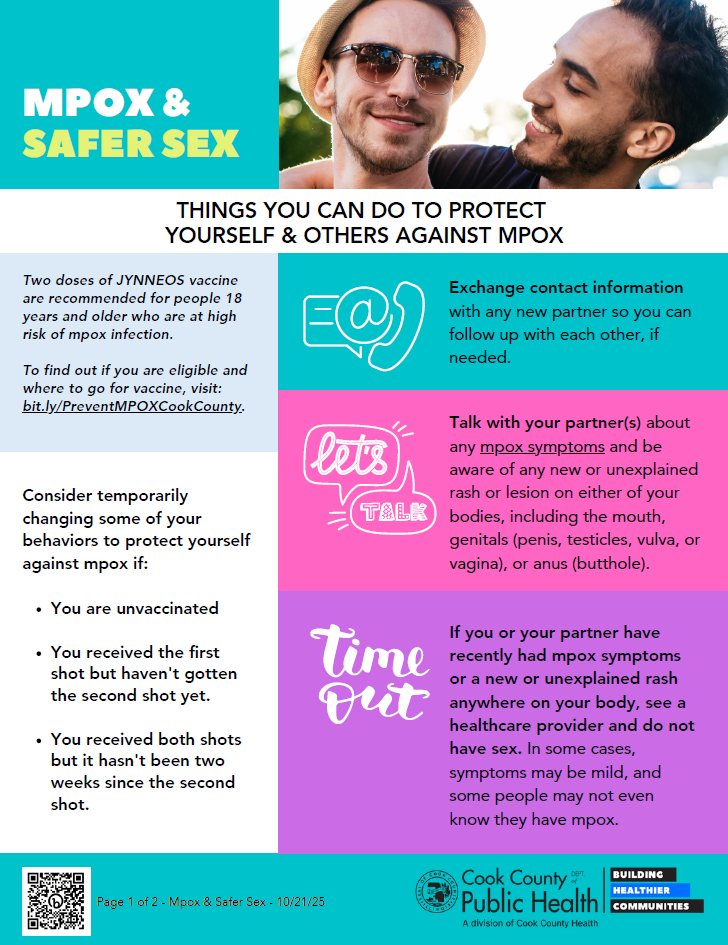
The JYNNEOS vaccine helps prevent mpox and is recommended for:
- People exposed to mpox
- Individuals at higher risk (e.g., multiple sexual partners, men who have sex with men, healthcare workers handling orthopox viruses)
- Vaccinations can be given before or shortly after exposure to reduce disease severity.
Get both doses of the FREE mpox vaccine. Even if you got the first shot already, you can still get the second shot for stronger protection against mpox and mpox symptoms. It’s never too late to vaccinate. Contact your healthcare provider about mpox vaccination, testing, and treatment or visit the Cook County Health mpox webpage. For mpox treatment, visit the Cook County Health Ruth M. Rothstein CORE Center website.
Get treated
- Most cases of mpox are mild and can be managed with supportive care, including rest, hydration, and pain control.
- Antiviral treatment (such as tecovirimat [TPOXX]) may be recommended for people at higher risk for severe disease or with severe symptoms, as directed by a healthcare provider.
- Pain relief options may include warm baths, topical treatments for skin discomfort, and over-the-counter pain medications.
- Isolate until all lesions have healed, scabs have fallen off, and new skin has formed to help prevent transmission.
Protect yourself and others
- Avoid close contact with people who have a rash or symptoms of mpox.
- Do not share bedding, clothing, or personal items with someone who is infected.
- Practice safer sex: Use condoms and consider limiting the number of sexual partners during outbreaks.
- Have open conversations with partners about symptoms and exposure risks.
- Wash hands frequently and clean/disinfect surfaces.
- If you develop symptoms, self-isolate and avoid close contact with others until evaluated by a healthcare provider and cleared according to public health guidance.
Follow-up for reportable STIs
Most STI infections, including mpox, are reportable infections. This means it’s likely that health department staff will reach out to you if your test results are positive. They do this to:
- Ensure you’ve been treated appropriately
- Provide you with complete information
- Collect a brief sexual history and possible exposure timeline
- Help stop the spread of infection in the community
Your personal information is protected under HIPAA regulations, and everything you share is completely confidential.
How we help
Since the beginning of the 2022-2023 mpox outbreak, Cook County Department of Public Health (CCDPH) has been closely monitoring the situation and raising public awareness about the recent uptick in cases in our area, with messaging about signs and symptoms, prevention (e.g., getting vaccinated, safer sex, avoiding social gatherings), testing, isolation, home care, and treatment.
CCDPH’s communicable disease program investigates potential cases of mpox and close contacts and provides technical assistance to medical providers so that people get the treatment they need.
Mpox Data Dashboard
Total Cases
Hospitalizations
Deaths
Residents Vaccinated
Mpox in Suburban Cook County
Cook County Department of Public Health (CCDPH) is tracking mpox cases and contacts in suburban Cook County. The risk to the general public is currently low. The graphs below contain information about confirmed mpox cases in suburban Cook County by age, race, sex, ethnicity and sexual orientation. Please be patient as graphs may take a moment to load.
Date Last Updated: July 6, 2026.
Data are provisional and subject to change.
Cases by Age Group
| Age Group | Count | (%) |
|---|---|---|
| 0-17 | 3 | (1.8%) |
| 18-24 | 14 | (8.4%) |
| 25-34 | 65 | (38.9%) |
| 35-44 | 56 | (33.5%) |
| 45-54 | 22 | (13.2%) |
| 55-64 | 7 | (4.2%) |
| 65+ | 0 | (0%) |
| Total | 167 | (100%) |
Cases by Sex
| Sex | Count | (%) |
|---|---|---|
| Male | 160 | (95.8%) |
| Female | 7 | (4.2%) |
| Total | 167 | (100%) |
Cases by Race/Ethnicity
| Race/Ethnicity | Count | (%) |
|---|---|---|
| Hispanic/Latinx | 61 | (36.5%) |
| Black, not Hispanic/Latinx | 57 | (34.1%) |
| White, not Hispanic/Latinx | 37 | (22.2%) |
| Other, not Hispanic/Latinx | 6 | (3.6%) |
| Asian, not Hispanic/Latinx | 5 | (3%) |
| Unknown | 1 | (0.6%) |
| Total | 167 | (100%) |
Cases by Sexual Orientation
| Sexual Orientation | Count | (%) |
|---|---|---|
| Lesbian or Gay | 65 | (38.9%) |
| Unknown | 44 | (26.3%) |
| Bisexual | 33 | (19.8%) |
| Straight, Not Gay or Lesbian | 22 | (13.2%) |
| Other | 3 | (1.8%) |
| Total | 167 | (100%) |
Frequently Asked Questions
FAQ fact sheets and social media graphics can be downloaded in English and Spanish by clicking on the Communications Materials tab.
Mpox is a rare disease caused by infection with the mpox virus. Mpox virus is part of the same family of viruses as variola virus, the virus that causes smallpox. Mpox symptoms are similar to smallpox symptoms, but milder, and mpox is rarely fatal. Mpox is not related to chickenpox.
Infections with the type of mpox virus identified in this outbreak—the West African type—are rarely fatal. Over 99% of people who get this form of the disease are likely to survive. However, people with weakened immune systems, children under 8 years of age, people with a history of eczema, and people who are pregnant or breastfeeding may be more likely to get seriously ill or die.
Although the West African type is rarely fatal, symptoms can be extremely painful, and people might have permanent scarring resulting from the rash.
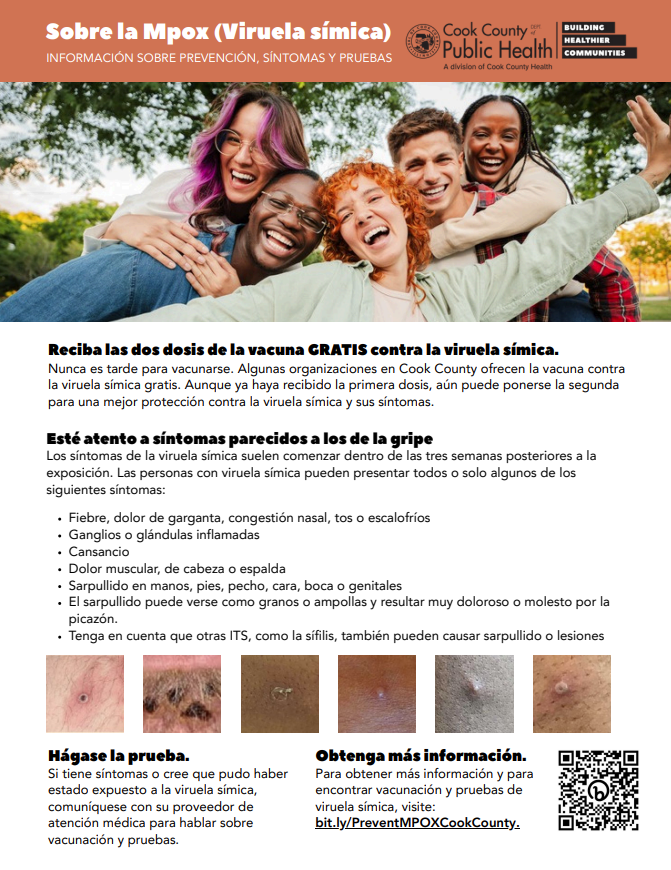
Below are some examples of what mpox looks like. For more information please visit the CDC website
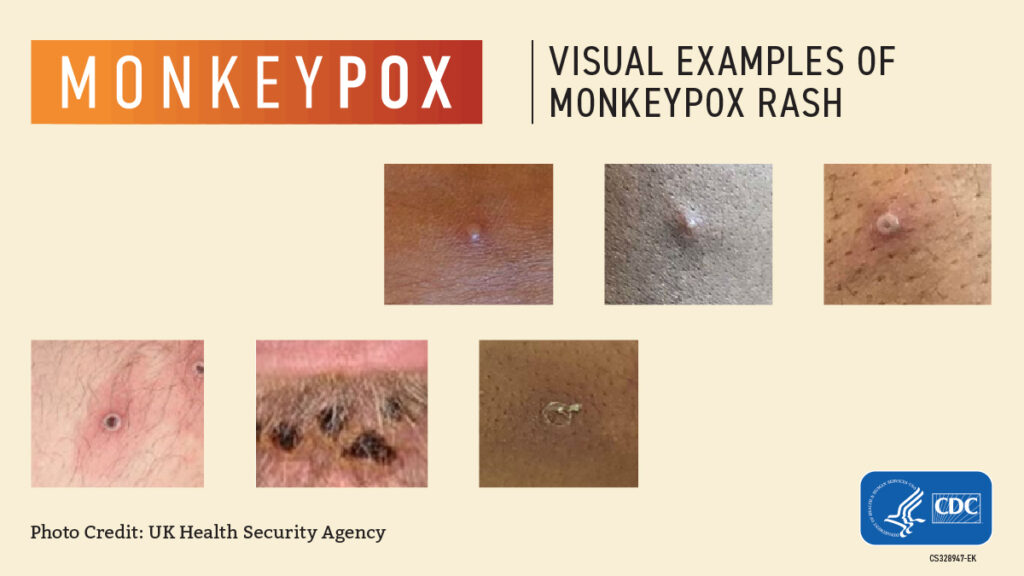
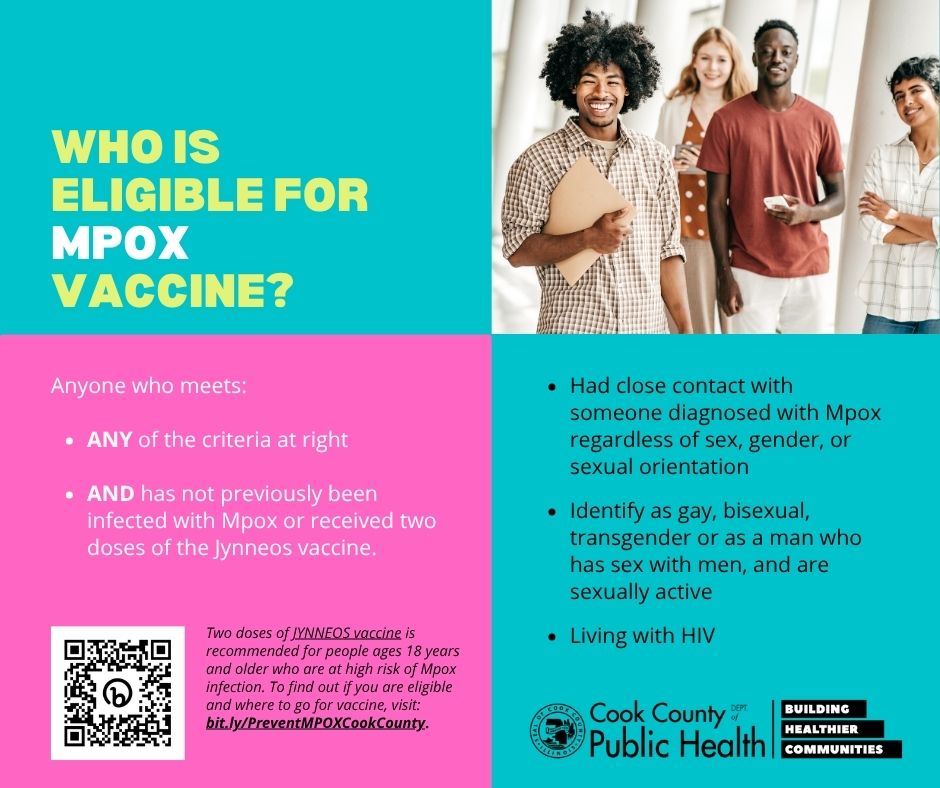
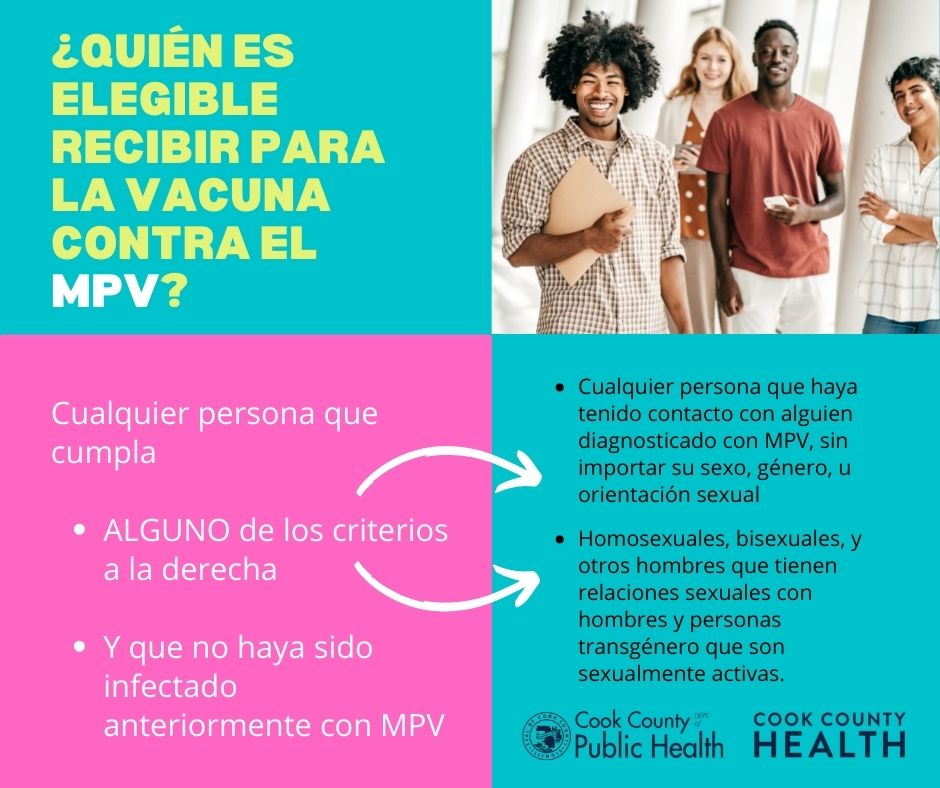
Anyone can get mpox. As of 8/18/2022, vaccine eligibility criteria for mpox vaccination will include anyone (including students enrolled in universities/colleges), who meets EITHER of the following criteria AND has not previously been infected with mpox:
- Anyone who had close contact (e.g., household members with close physical contact or intimate partners) with someone diagnosed with mpox regardless of sex, gender, or sexual orientation.
- Gay, bisexual, and other men who have sex with men and transgender persons who are sexually active.
If this sounds like you, or you have symptoms of mpox, contact a healthcare provider. If you don’t have a healthcare provider, call Cook County Health at 312-864-0200 or the HIV Resource Hub at 844-482-4040. CDC recommends vaccination within 4 days from the date of exposure for the best chance to avoid getting mpox.
- Fever
- Chills
- Headache
- Muscle aches
- Fatigue
- Enlarged lymph nodes
- Rash on face, body or genitals
Please note: Some individuals may only get a rash and no other symptoms.
If you have fever, chills, headache, muscle aches, fatigue, enlarged lymph nodes, rash or sores on face, body or genitals:
- Stay home and away from other people (isolate).
- Schedule an appointment with a healthcare provider. If you don’t have a healthcare provider, call Cook County Health at 312-864-0200 or the HIV Resource Hub at 844-482-4040.
- Wear a mask and cover rash (if present) when you go to the appointment.
- If you have a rash or sore available for testing, the healthcare provider will call the health department for next steps. The healthcare provider will take a sample from the rash or sore to send to a lab.
- Wear a mask and keep rash covered while in public and continue to isolate while waiting for test results.
Mpox can spread in various ways. Mpox can spread person-to-person through:
- Direct contact with the infectious rash, scabs or body fluids
- Respiratory secretions during prolonged face-to-face contact or during intimate physical contact such as kissing, cuddling or sex
- Handling personal items like bedding, towels, laundry, utensils, fetish gear and sex toys
No. mpox is spread by direct contact with:
- Infectious rash, scabs or body fluids
- Respiratory secretions shared during prolonged face-to-face and physical contact (kissing, cuddling or sex)
- Personal items like bedding, towels, laundry, utensils, fetish gear and sex toys.
- If vaccination is given 4–14 days after the date of exposure, it may reduce symptoms, but may not prevent mpox infection.
- CDC recommends vaccination within 4 days from the date of exposure to avoid getting mpox.
- The sooner an exposed person gets the vaccine, the better.
Side effects are common and usually mild. Most people have redness, swelling and pain where they got the shot. You may feel tired, have a headache and muscle pain.
- Most people recover from mpox without needing treatment.
- There is an antiviral drug called Tecovirimat (TPOXX) that can be given to people who are more likely to get severely ill, like patients with weakened immune systems, genital or eye lesions, or are pregnant.
- TPOXX must be prescribed by a physician in coordination with the local health department (CCDPH).
- For more information, talk to your provider or visit the CDC website at: https://www.cdc.gov/poxvirus/monkeypox/clinicians/Tecovirimat.html
Please visit the Illinois Department of Public Health website for school guidance and daycare guidance, including patient isolation procedures and prevention and control measures.
People who think they have mpox or have had close personal contact with someone who has mpox should visit a healthcare provider to help them decide if they need to be tested for mpox. If they decide that you should be tested, they will work with you to collect the specimens and send them to a laboratory for testing.
If you don’t have a healthcare provider, call Cook County Health at 312-864-0200 or the HIV Resource Hub at 844-482-4040.
Cook County Health is offering mpox vaccination at several health centers, including suburban Cook County locations in Arlington Heights, Blue Island and North Riverside. Learn More.
Click on the “Get Care” tab above for a list of CCH and CCDPH vaccination partners.
In suburban Cook County, we are distributing vaccine to healthcare providers who reach eligible populations. Please be patient. There is currently not enough vaccine for all those who qualify to receive a dose, but this is expected to improve as more vaccine becomes available.
If you meet the eligibility criteria under "Should I get vaccinated for mpox?" you can:
- Contact your healthcare provider. (Note: If the provider is not familiar with mpox, encourage them to visit our website for more information.) OR
- Click the "Get Care" tab to see the list of healthcare providers who are offering JYNNEOS™ vaccination in suburban Cook County. (Note: Supplies are limited. Appointments may be required.).
- If you are a Chicago resident, please click here for more information.
Communications Materials
Mpox Communications Materials - in English
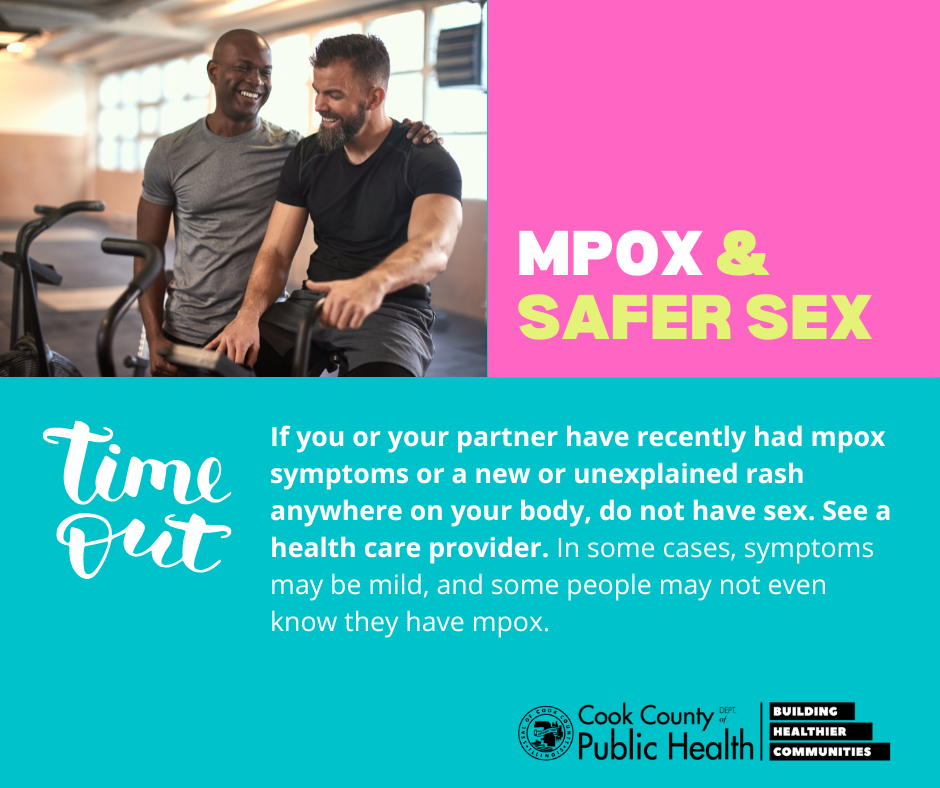
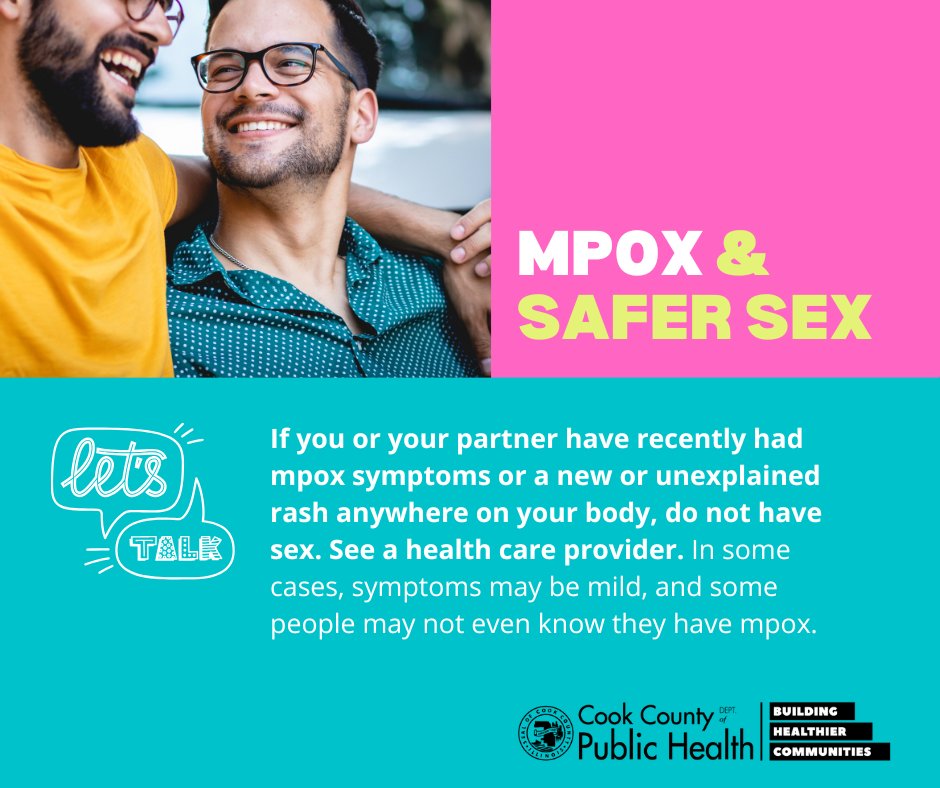
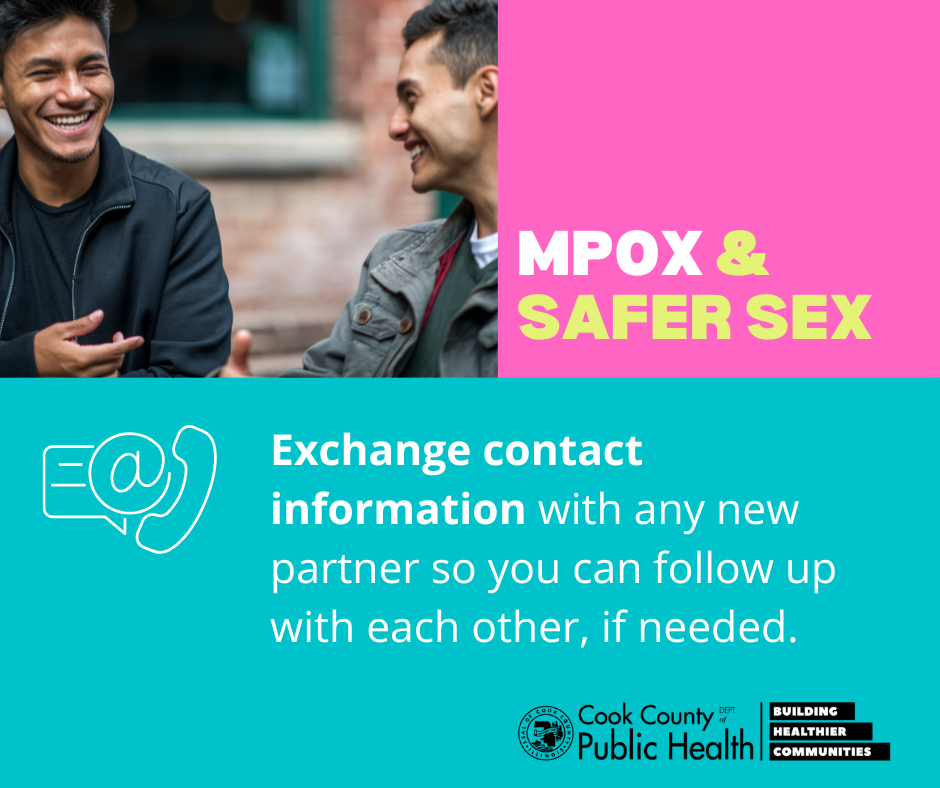
Mpox Communications Materials - in Spanish
Updated July 6, 2026, 5:31 PM